
ASCEND
ASCEND Spaceflight Experiment
The ASCEND (Aerospace Cellular Systems for Endothelial and Network Dynamics) experiment is a spaceflight investigation designed to characterize how microgravity and the space radiation environment alter vascular and endothelial function at the cellular level. Building on ground-based studies conducted in the SPaRTAN laboratory, ASCEND extends these investigations into true spaceflight conditions to capture biological responses that cannot be fully replicated on Earth.
The experiment focuses on endothelial cells—key regulators of vascular integrity, inflammation, and coagulation, which are known to be highly sensitive to both radiation and microgravity. Using a self-contained payload, ASCEND monitors cellular health, morphology, and functional signaling pathways over time, while simultaneously measuring the local radiation environment with integrated microdosimetry systems. This dual-measurement approach enables direct correlation between radiation exposure and biological response in orbit.
ASCEND also represents a novel engineering effort, designed to autonomously conduct complex biological experiments in space with minimal crew interaction. The system integrates environmental control, imaging, sensing, and data acquisition into a flight-qualified, fully autonomous platform capable of maintaining cell cultures and executing experimental timelines without real-time human intervention. This approach reduces operational burden on crew while increasing experimental consistency and scalability for future missions.
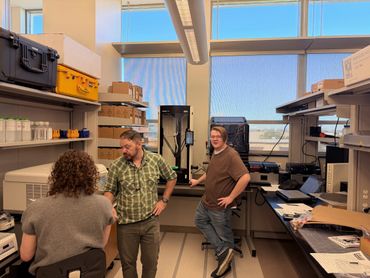
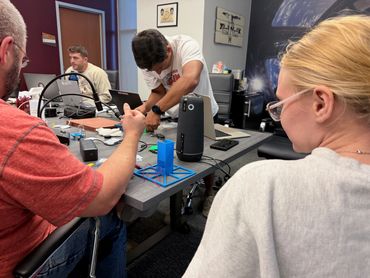
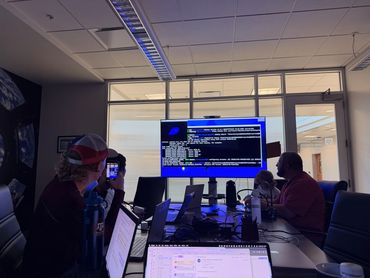
The development of ASCEND serves as a central training platform within the Aerospace Medicine and Engineering ecosystem at Texas A&M. The experiment is the focus of aerospace engineering capstone design teams working in close collaboration with nuclear engineering students and aerospace physiology graduate trainees. This multidisciplinary structure integrates spacecraft systems design, radiation physics, and biological science into a single project pipeline—providing students with hands-on experience in flight hardware development, experimental design, and translational space health research.
The experiment incorporates both human- and mouse-derived endothelial cell models to enable cross-species comparison and improve translational relevance to astronaut health. Real-time and post-flight analyses include imaging-based assessment of barrier integrity, molecular profiling of stress and inflammatory pathways, and evaluation of signaling factors associated with vascular dysfunction and coagulopathy.
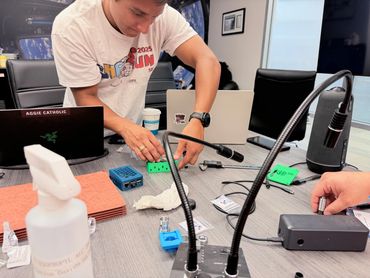
Hardware developed and tested within the SPaRTAN laboratory—including radiation detection and environmental control systems—supports reliable operation in the spaceflight environment while providing high-fidelity data return. The integration of biology, radiation sensing, and autonomous systems reflects a next-generation approach to spaceflight experimentation.
By linking spaceflight radiation exposure with endothelial dysfunction, ASCEND directly addresses a central risk to human space exploration: the potential for vascular instability, impaired tissue perfusion, and pro-coagulant states during long-duration missions. The results will inform predictive risk models, guide development of countermeasures, and contribute to the design of safer spacecraft environments for future exploration-class missions.
Copyright © 2021 SpaRTAN Physics Group - All Rights Reserved.